Opening
Open Positions
I am always interested in hearing from outstanding and highly motivated prospective PhD students and postdoctoral researchers who wish to work with me in any of the research areas listed below at the University of Nottingham.
Office: B113, Coates Building, University Park, Nottingham, NG7 2RD, United Kingdom
Phone: +44-115-951-5151
Email: a.chen@nottingham.ac.uk
Research Keywords (in alphabetical order)
Adaptive optimal control, aerial robotics, aero-engines, aerospace systems, autonomous systems, avionics, control theory, cyber-physical systems, drones, efficient learning, embodied intelligence, flight control, game theory, in-situ learning, learning-based control, machine learning for control, neural networks, nonlinear control, optimal control, physical reservoir computing, propulsion systems, quantum control, quantum machine learning, quantum reservoir computing, reinforcement learning, reservoir computing, robot manipulators, robotics, robust control, spacecraft, safe learning, safety-critical control, soft robot hands, unmanned aerial vehicles (UAVs).
If you are interested, please feel free to contact me directly by email with your CV and a brief statement of research interests.
Postdoctoral Opportunities
I am happy to support strong candidates applying for external postdoctoral fellowships, including (but not limited to):
- UKRI Postdoctoral Fellowships
- Marie Skłodowska-Curie Postdoctoral Fellowships (MSCA-PF)
- Royal Academy of Engineering Research Fellowships
- EPSRC / industry-funded research associate positions
If you are considering applying for a fellowship and would like to discuss potential topics, please get in touch.
PhD Opportunities
Fully funded and self-funded PhD positions are available through the University of Nottingham and associated doctoral training programs.
Common funding routes include:
- UKRI / EPSRC Doctoral Training Partnerships (DTP)
- Centre for Doctoral Training (CDT) programs in robotics, aerospace, or AI
- University of Nottingham scholarships
- School or Faculty doctoral scholarships
- For Chinese applicants: University–CSC joint PhD scholarships
Prospective students are encouraged to review:
- Entry requirements for PhD study in Engineering / Computer Science
- English language requirements
- University of Nottingham graduate admissions pages
If you have questions regarding suitability or research direction, you are welcome to contact me before submitting a formal application.
Current and Past Openings (Examples)
- PhD position: In-situ learning for autonomous aerial systems with energy-optimal control
- PhD position: Safe and robust reinforcement learning for embodied intelligence with control-theoretic foundations
Research Vision and Philosophy
My research aims to advance embodied intelligence: intelligence that emerges from the tight coupling between learning, control, and physical interaction with the real world.
In particular, I am curious about:
- In-situ learning: Enabling robots to learn directly on hardware during real-world operation.
- Adaptive optimal control: Merging optimality, stability, and robust uncertainty management.
- Efficient reinforcement learning: Achieving high performance with minimal data and computation, while prioritizing safety.
“What's outside the simulation?”
The ultimate goal is to deepen our understanding of the world via intelligence (not only as an engineering construct, but as a fundamental phenomenon arising from the interaction between learning, control, and the physical world). This pursuit naturally extends beyond engineering into philosophy and theology, touching on enduring questions about the nature of intelligence, consciousness, reality, and the existence of God.
Friedrich Nietzsche once wrote, “He who has a why to live can bear almost any how.” In the context of AI, this resonates strongly: powerful algorithms and hardware answer the how, but the why (purpose, values, and direction) remains a human responsibility. Without this, intelligence risks becoming optimization without meaning.
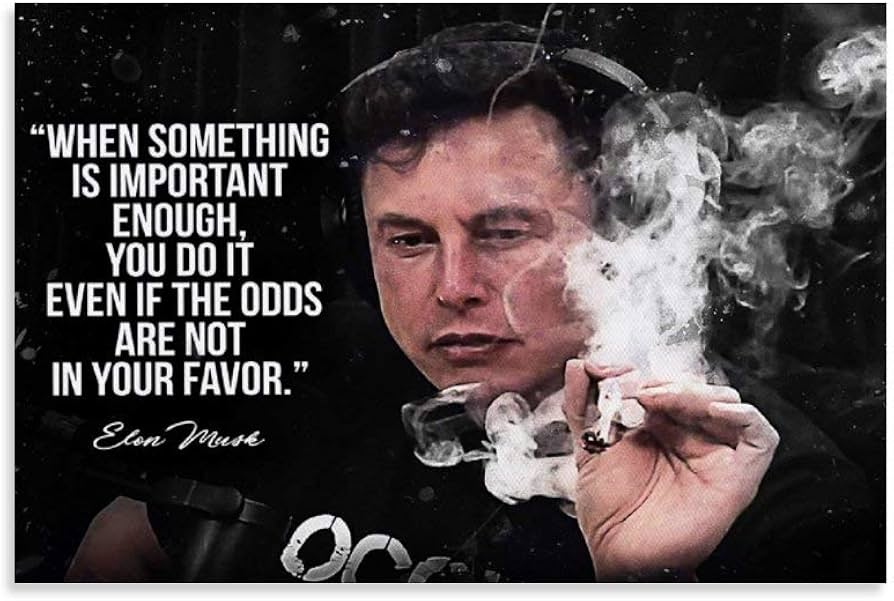
Elon Musk also said, “One of the really tough things is figuring out what questions to ask. Once you figure out the question, then the answer is relatively easy.” By exploring human consciousness and humanity’s drive to reach the stars and space, we can build autonomous systems that are truly intelligent, safe, secure, and reliable. In Elon’s words, “I came to the conclusion that we should aspire to increase the scope and scale of human consciousness in order to better understand what questions to ask. Really, the only thing that makes sense is to strive for greater collective enlightenment.” This pursuit ties into why we venture into space: to preserve and expand the light of consciousness beyond Earth, and why we develop AI: to augment human potential and ensure biological intelligence evolves alongside digital advancements.
Drawing from Elon’s simulation hypothesis, where he argues there’s a “one in billions” chance we’re in base reality, AI could play a pivotal role in probing deeper existential questions. He has suggested that the first question to ask a superintelligent AI would be: “What’s outside the simulation?” If we are indeed in a simulation, what’s outside? He speculates that base reality might be “boring,” as simulations distill the most interesting aspects of existence. Through my research, we aim to develop AI systems capable of tackling such profound inquiries, bridging philosophy, consciousness, and advanced technology to uncover the nature of our reality.
Disclaimer
If you wish to apply for a PhD or postdoctoral position with me, please do so only through official university channels or by contacting me directly.
I do not accept applications submitted via commercial agencies, third-party platforms, or intermediaries without prior authorization.